
Forbes media
Social Templates
- role
- design intern on the content & design studio, 2026
- skills
- design system
branding - tools
- figma
- timeline
- 10 weeks
overview
Created a 100+ card modular social template system with typography, spacing, and component guidelines for scalable Forbes branded content.
At the start of my time at Forbes, I had a coffee chat with Forbes CEO, Sherry Phillips, where we talked about the changing media landscape and how Forbes has been navigating the shift. Forbes began as a traditional print media company, but as audiences increasingly turned to the internet, and social media, for news, the brand recognized the need to evolve how it told and distributed stories.
As these habits changed, the way stories were presented became just as important as where they were shared. With social content continuing to grow, there was an opportunity to create a more cohesive visual language while making the production process more efficient and scalable.
How Social Templates Improve Speed, Consistency, and Scale
Consistent Branding
Standardized layouts and typography create a cohesive, recognizable look across every social post.
Faster Turnaround
Ready-to-use templates help teams publish high-quality content quickly to meet editorial and client demands.
Streamlined Collaboration
Templates let designers define the system while editors update copy within set word and character limits, reducing revisions.
the result: 100+ ready-to-use card templates
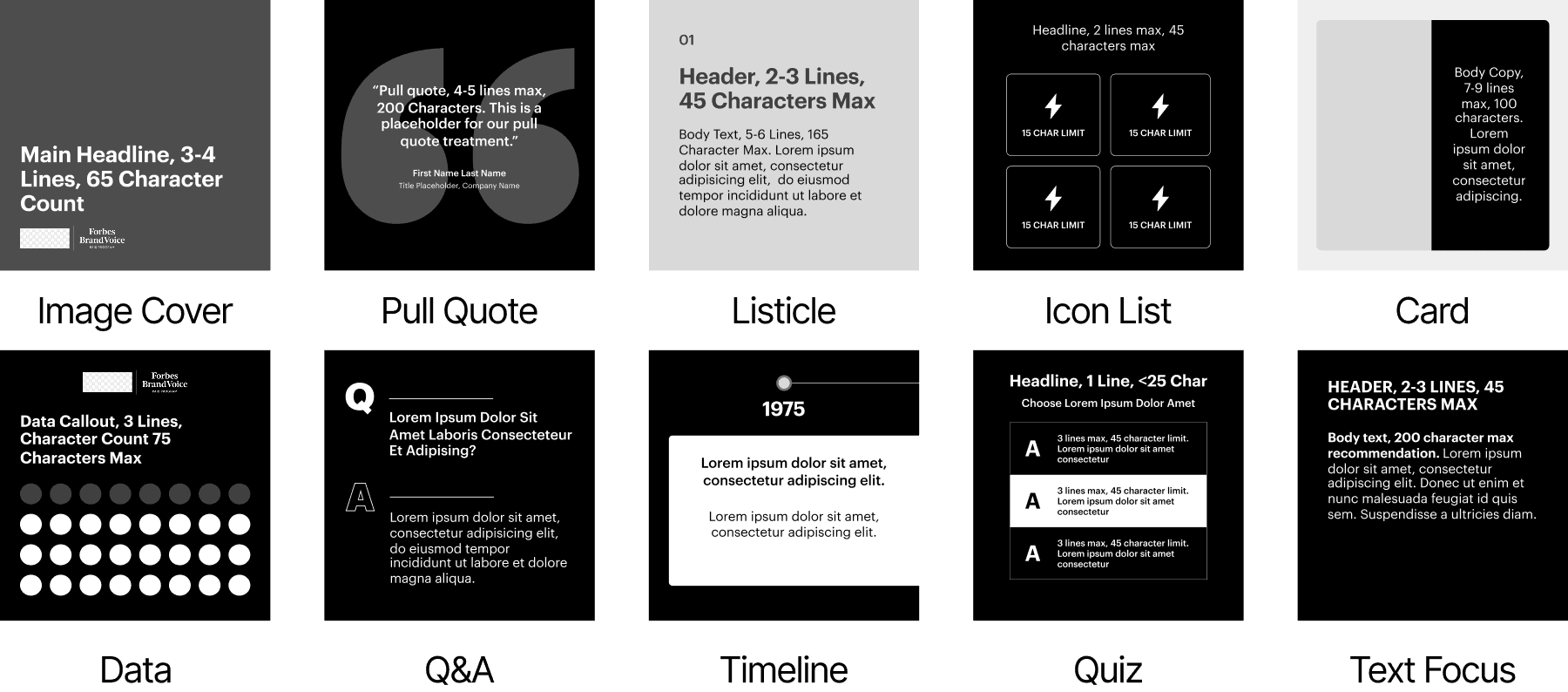
After conducting external and internal competitive analysis and aligning with Forbes’ existing brand guidelines, I created over 100 card templates spanning 13 different content categories.
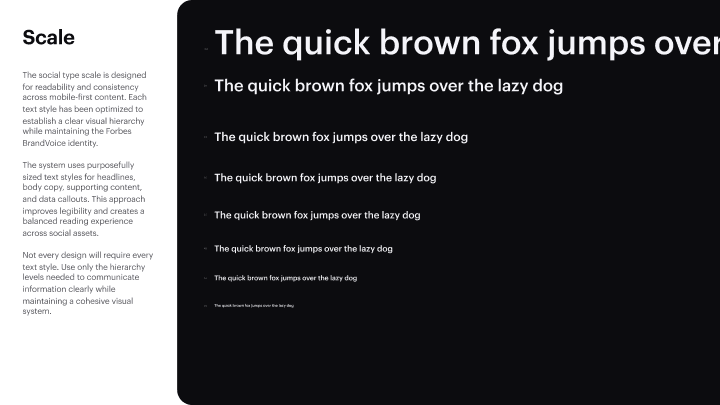
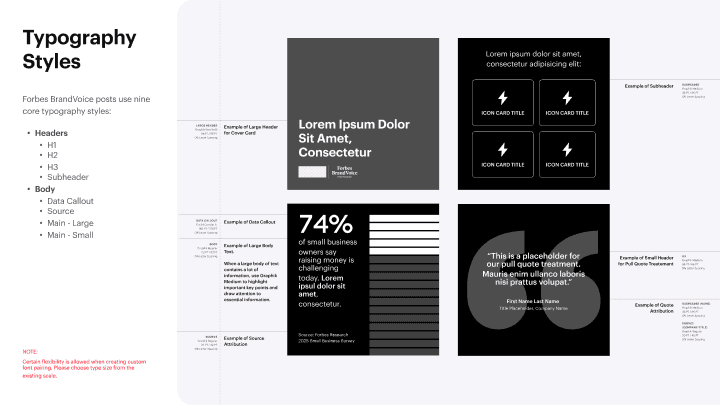
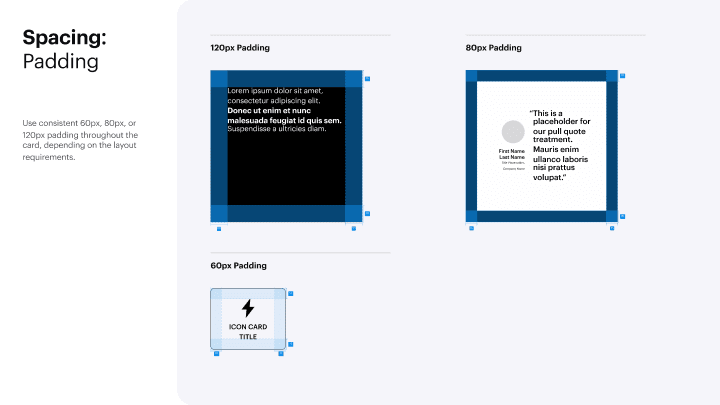
To support a consistent visual system, I also developed typography and spacing guidelines tailored specifically for social. Each card included recommendations for line and character length to help maintain readability and consistency across formats. The full system was then presented and shared with the Content and Design Studio for use across social content.
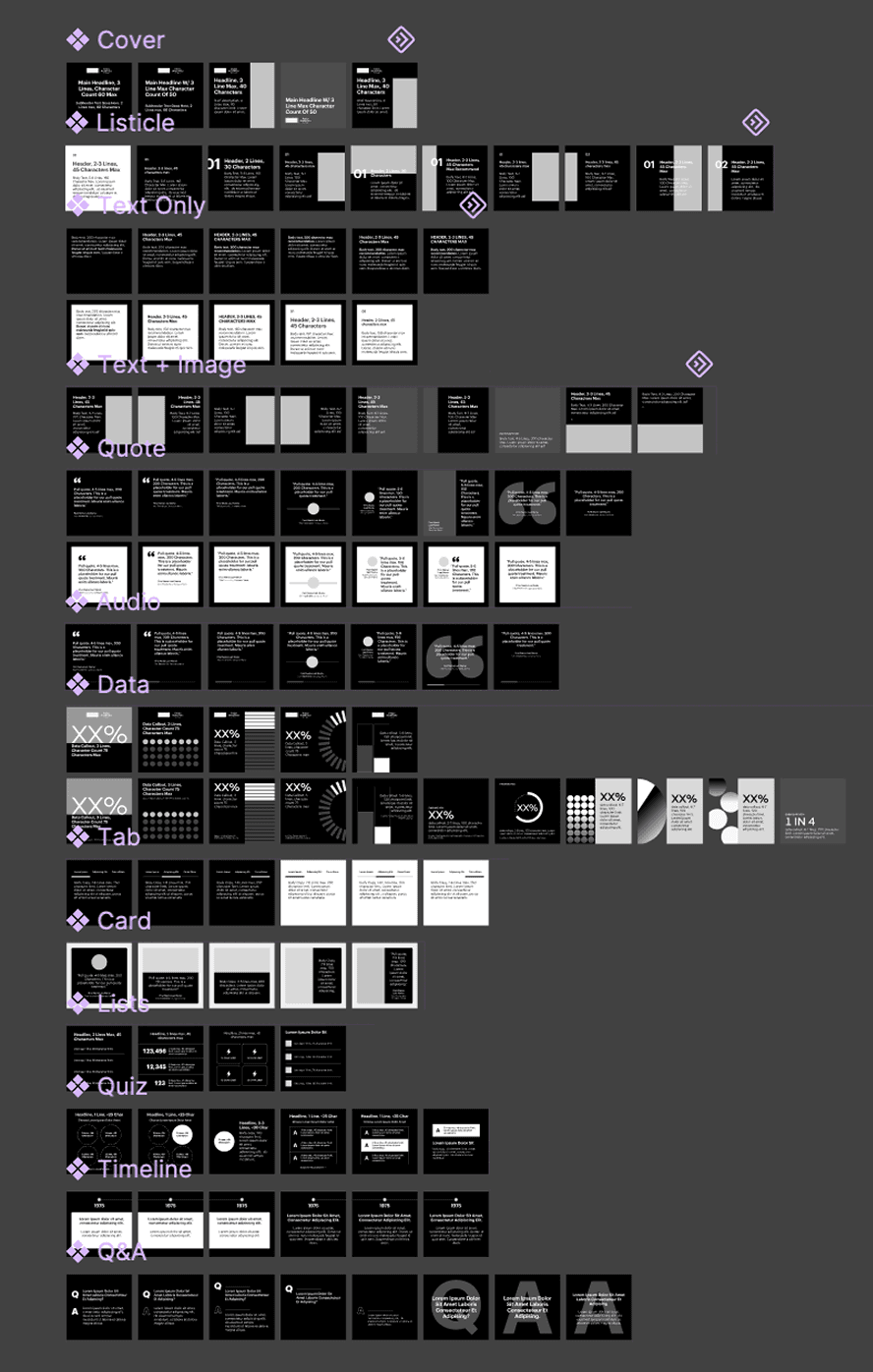
card types
Next steps & learnings
In my presentation to the Content & Design team, I shared the work with the editorial side for the first time, along with recommendations to explore motion and sound, capabilities the team already had but had not yet brought into social.
The next step would have been to work closely with editors to test and refine the templates using real content. One real-life test helped shape the system, with further iteration needed to make it more flexible and effective.
This project showed me how design systems can improve efficiency and scalability while reinforcing brand through a cohesive foundation for storytelling & I am excited to hear back about how it has been implemented by the team.